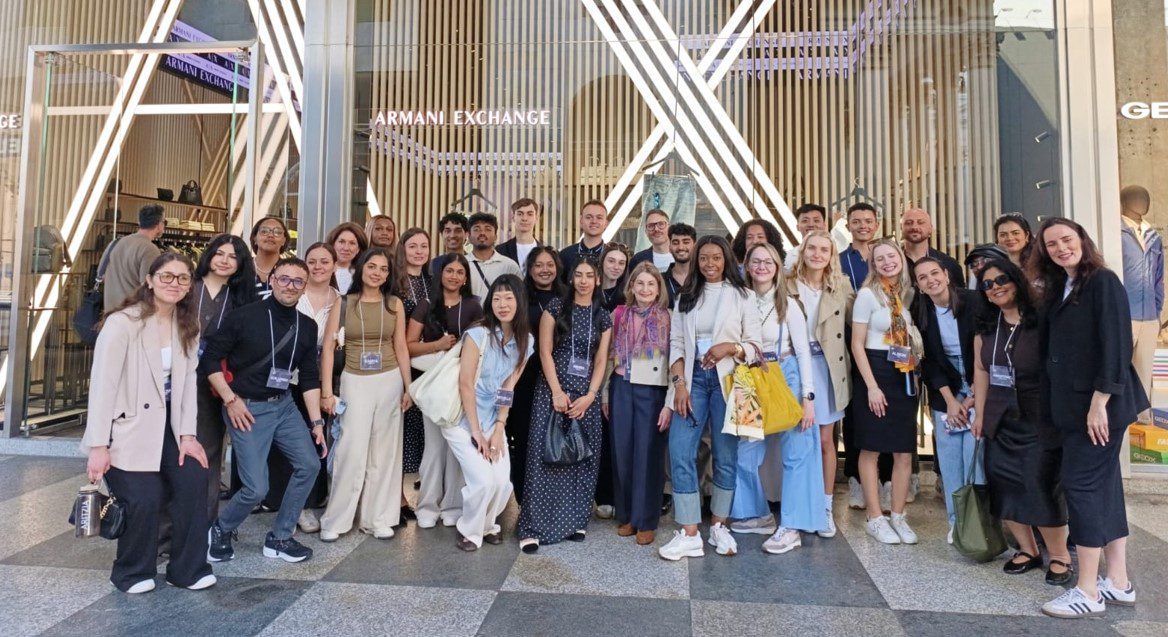
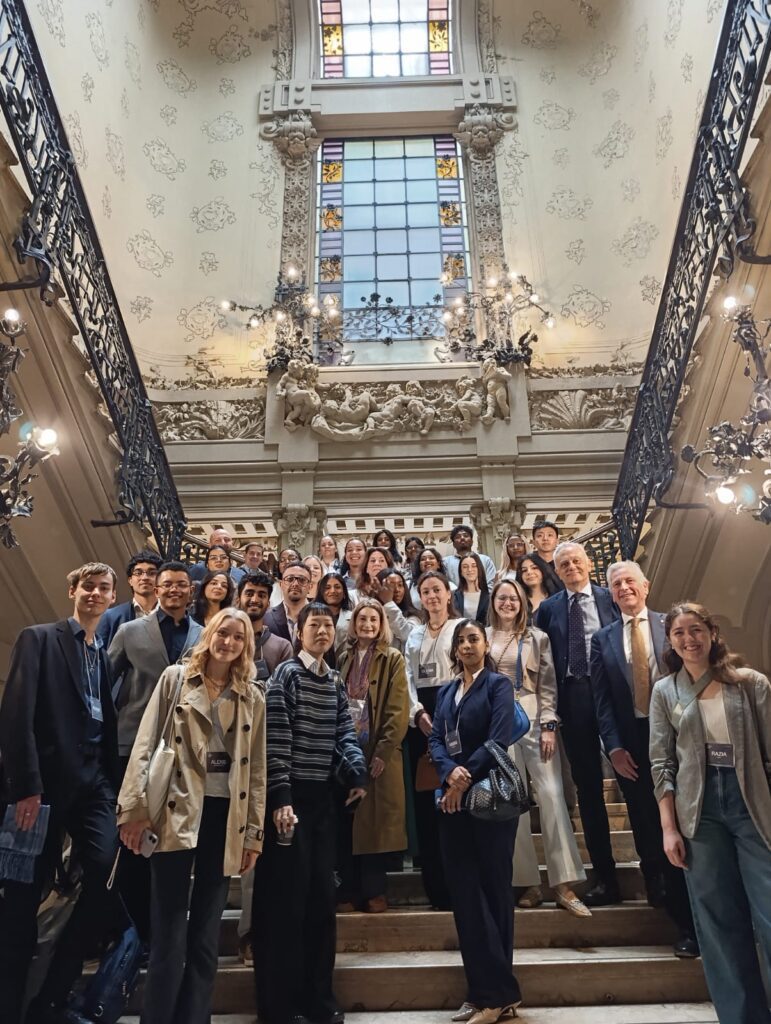
Ted Rogers School students recently gained invaluable international experience on an experiential learning trip to Milan, Italy, where they dove deep into the world of sustainability and luxury. This immersive journey was part of the RMG917: Experiential Learning – Travel Study course.
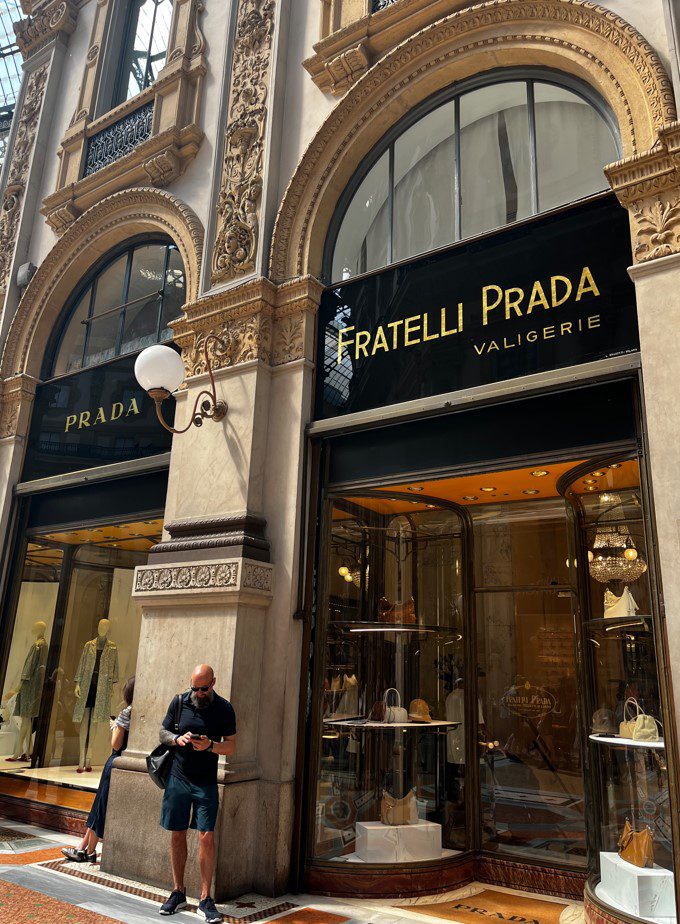
The course is designed to fully prepare students for their international adventure. It does this by exploring a key retail theme through dedicated classroom instruction and virtual guest lectures from experts in the destination country. The trip itself serves as the hands-on culmination, allowing students to directly apply and deepen their understanding of the chosen theme in a real-world setting outside of Canada.
This year’s study trip to Milan focused on the intersection of sustainability and luxury. This rich experience brought together a diverse group of 31 individuals, including 18 Retail Management students, six Ted Rogers MBA students, two Hospitality and Tourism Management students, one Marketing Management student and one Global Management Studies student. Retail Management Professor Dr. Donna Smith was the course instructor and trip leader, and Interim Director, Retail, Joe Aversa accompanied the students on the trip.
From April 26 to May 3, 2026, students spent an immersive week in the heart of a leading global luxury fashion market, going to Armani Exchange for a private store visit, touring Milan’s first eco-conscious hotel, learning about trade relations at the Canadian Consulate, taking a walking tour through the heart of the city’s Fashion District, visiting the PwC office and Galleria Campari, and exploring a winery.
Here is what a few students had to say about their experience:
Luxury shopping experience
Suveka Suvi, fifth-year Retail Management student
Our trip to Milan was an impactful example of how experiential learning aids in deepening students’ understanding of luxury retailing far beyond the classroom. Our professor Dr. Donna Smith did a great job in preparing us during the semester so we were able to connect many of the theories and concepts to the realities of the industry.
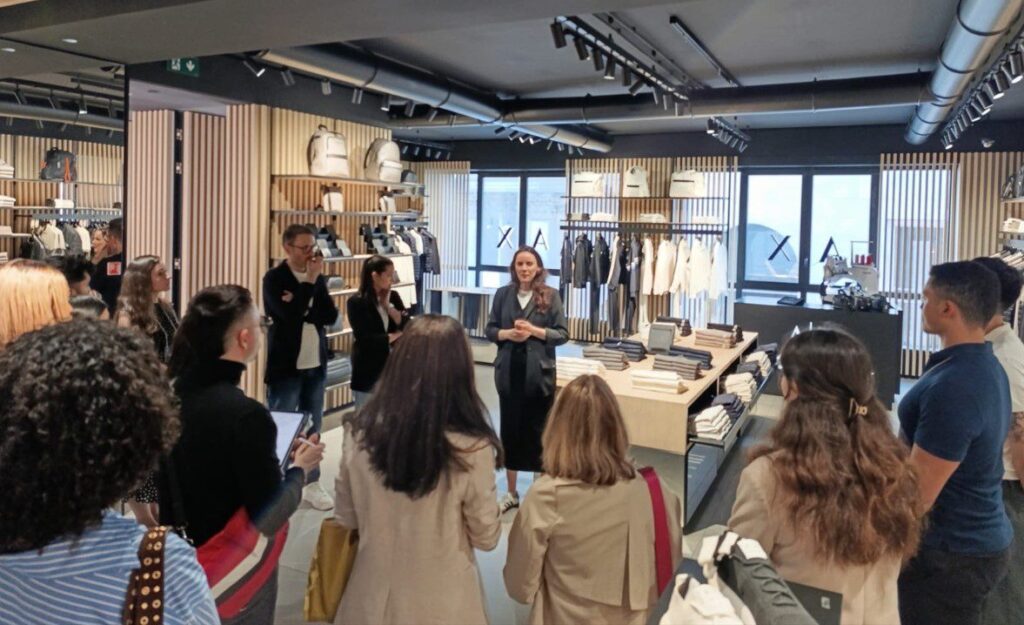
Our first stop was to Armani Exchange where we met with their Global Training Manager, Lara Lunaschi, alongside the store managers who were overseeing the men’s and women’s divisions of the location by Galleria Passarella. They had a distinctive approach to customer service as part of a tiered-system, reflecting well on their ability to provide precise and attentive service to new, existing and loyal clients. Every detail was carefully curated, especially within this location that was considered one of their more sacred locations (as it was in the city where the designer, Giorgio Armani, had lived and worked in).
It was also fascinating to see how Armani Exchange had exhibited this with their option to customize products through embroidery instantly with different colours and styles to choose from. Personalization was a major concept that we had learned in our classroom, as it helps build an emotional connection. When clients come into the store with the idea of purchasing, they can further customize the product so as to make something memorable and meaningful for themselves or a loved one.
Read more about Suveka’s experience
On our second day, we were invited to Pardgroup’s headquarters in Milan and met with the Managing Director of the US division, Stefano Pieri, who had illustrated the growing influence that experiential retail theatre is having within the luxury industry. Pardgroup specializes in creating beautifully immersive retail experiences that range from building creative storefront windows to entice clients, pop-ups and pop-ins (in and outside of a store that spotlight the brand or showcase a specific line of products), alongside more large-scale events. They have a vertically integrated business model allowing them to oversee each phase of production, while also being able to confidently incorporate ESG principles into their overall operations.
Pieri detailed how Pardgroup often encourages luxury brands to adapt to sustainable initiatives within their partnership. One influential example was their collaboration with Louis Vuitton that involved creating a holiday storefront display using LEGO pieces that was later donated to Fondazione Diamante and to children’s hospitals in the UK once the season ended. It was inspiring to witness their dedication to sustainability and creativity in retail. The redistribution of dismantled materials from their activities serves as a great reminder that circularity can be implemented throughout any stage of the production journey.
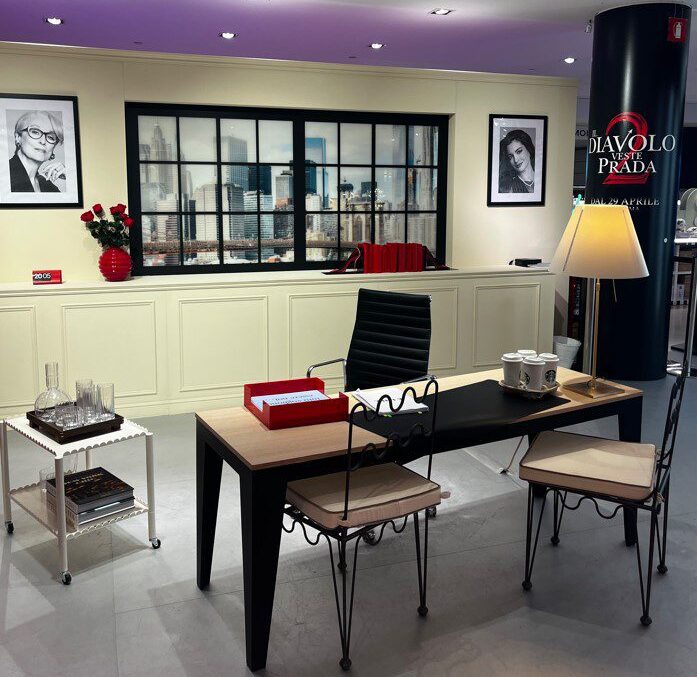
RMG 917’s experiential trip follows a semi-structured learning approach where we were able to directly engage with industry professionals in accordance to the itinerary while also being able to independently explore the luxury capital. During one of our free afternoons, I visited Rinascente Milano with my friends where we witnessed Il Diavolo Veste Prada (The Devil Wears Prada) installation right next to the Duomo as part of their promotions for the upcoming sequel. The activation involved the re-creation of the iconic Miranda Priestly’s office at Runway Magazine.
There were beauty products and services offered from Dyson and L’Oreal, exclusive merchandise, alongside luxury product displays that were tied to the portfolio of brands that Rinascente carried. This experience tied in so well with the purpose of our trip as it demonstrated how luxury retailing extends far beyond simply selling high-end products. It involves emotionally connecting with consumers through the storytelling, personalization, attentive service and immersive experiences that leave the consumer with memories that are more impactful than the product itself.
Kanya Navanathan, fourth-year Retail Management student
Visiting Milan changed my perspective on the luxury industry. I would love to say experience is the best teacher, but I would hate to undermine Dr. Donna Smith’s and our tour guide Lorenzo Barboni’s hard work. Without their preparation, we would have come into this trip with no cultural competencies and historical background. Before this course, I thought the luxury industry was simple, but now I know the truth.
Everyday felt like a safari, but instead of spotting lions and zebras, we were spotting relics of the past and watching them transform in front of our eyes. While some days we had a cozy shuttle bus taking us to the outskirts of the city, we mainly used the subway to navigate from meeting to meeting. Even the subway ad near our hotel was beckoning us to visit our first stop: Armani Exchange.
Armani Exchange is the entrypoint for people to enter the world of Armani, or Emporio Armani. This specific branch worked on making clients comfortable with the brand ethos, and leaned a little more casual. Despite this edgier profile, the Global Training Manager Lara Lunaschi explained the importance of customer service. Customer service isn’t just about friendly smiles, eagerly waiting for questions or just “knowing your stuff,” it was about what wasn’t being said. The non-verbal communication, the attention to detail, and embodying brand values. Lunaschi taught us that connections aren’t made overnight, they require hard work to cultivate.
Read more about Kanya’s experience
Understanding cultural boundaries, expectations and values allowed clients to feel connected with staff in-store beyond the sale. Milan is known for delivering world class service, but learning about the types of training they receive to deliver that opened my eyes to the intentional effort it takes. It also inspired me to bring that standard everywhere I go in the future, whether at the grocery store or a boardroom meeting.
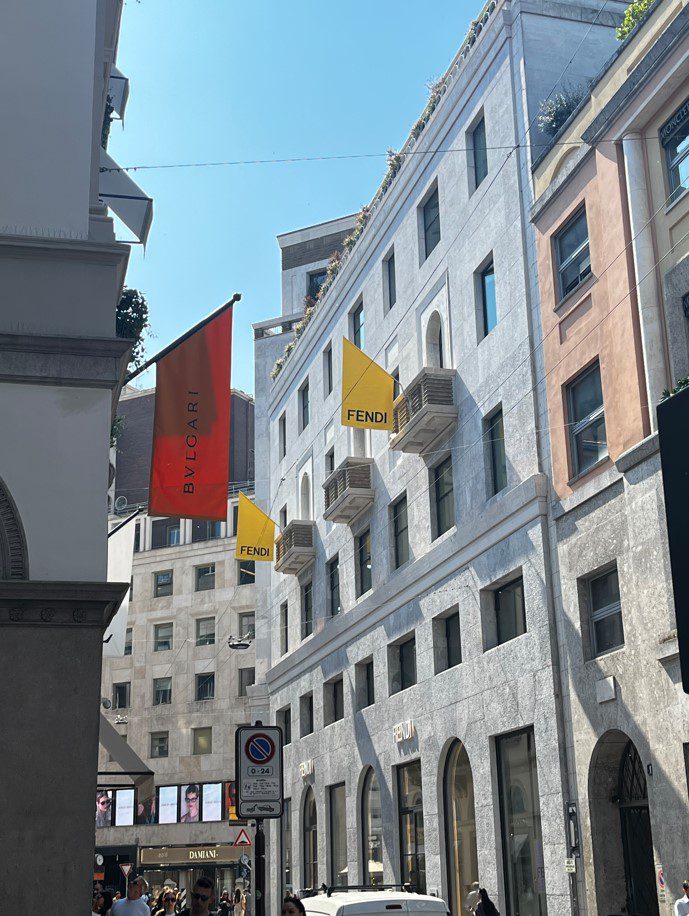
After our visit to Armani Exchange, we got to stretch our legs and did a Fashion Walking Tour along Quadrilatero della Moda. Our tour guide took us through the narrow streets lined with luxury stores, and told us all about the history of these brands, these places and even the architecture. Walking along cobblestone roads older than Canada felt humbling. The contrast of beautiful Spring ’26 collections being hosted in buildings made centuries ago made me appreciate the rich history of fashion in Italy. Stores like Moschino, Gucci and Prada, among others had their roots deeply entrenched in the history of Milan.
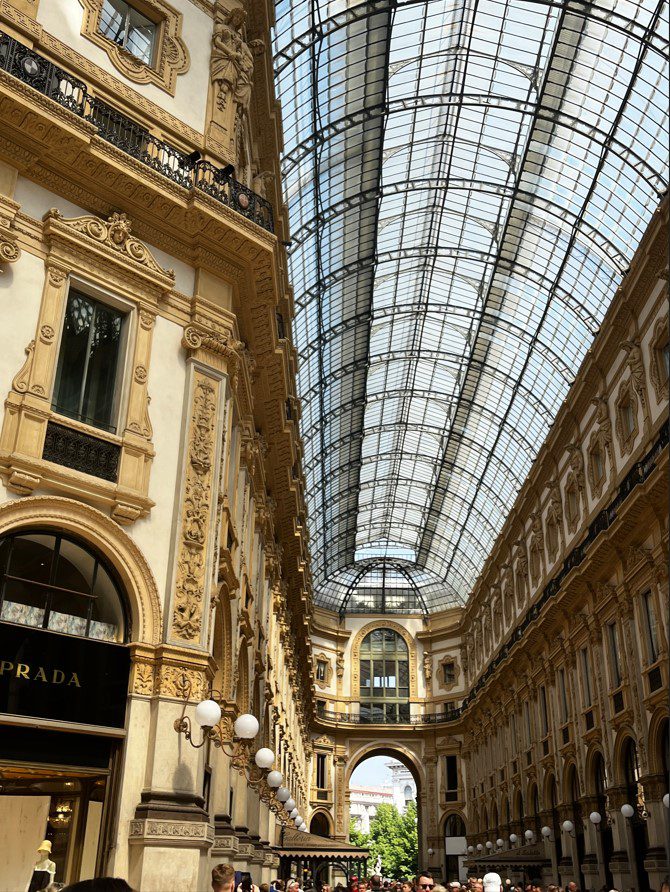
The key takeaway from this tour was that brand heritage is deeply embedded into the design language of the luxury industry. While many brands are modernizing their collections to appeal to a younger demographic, they never compromise on their identity. This preservation of brand values exemplifies itself in the look and feel of how products are displayed. These ornate displays often contain symbols reminiscent of older art movements in Milan, from the Renaissance to Post Modernism. Learning more about the art and culture of Milan, I was more aware of how these elements shaped the design language of luxury brands here, and how they affect stores across the globe.
After this walking tour, we made our way to the final stop: The Duomo. We were all in awe of the natural beauty and skilled craftsmanship poured into the church. From the gold detailing on the doors, to the ornate sculptures alongside the outer walls- we had never seen anything this intricate in our lives. If the Duomo itself wasn’t exciting enough, the Piazza del Duomo had luxury stores like Louis Vuitton and Dior with their own window displays to boast the newest collections they had. Even these French brands found ways to blend into the architectural language of Milan.
After an entire day of walking across the city, I decided to explore some thrift stores in Cerchia dei Navigli, the broader borough we had been in. These stores had just as much personality as the luxury boutiques. Posters lined the wall, free pamphlets for mutual aid events or gallery exhibits by the door, and trendy clothes as far as the eye could see. I even got to visit BIVIO, a thrift store specializing in the sale of second-hand vintage luxury. In fact, one of my classmates ended up purchasing an Hermès bag from a location I had visited. While BIVIO’s store design was nothing like Hermès, the energy at the store was electric. The clothing, the displays and the staff told a different story, but the same ending. Despite the huge disparity in price, in brands and in design language, all these stores showed their love to the city.
Learning in the classroom was one thing, but visiting the country you have been studying for nearly three months? It exceeded my expectations. Every day was better than the one before, because we learned something new, gained unique perspectives and met people who we could never meet back home.
Galleria Campari
Students had the opportunity to take a tour of Galleria Campari — the museum dedicated to the Italian alcoholic liqueur brand Campari, attend a business presentation and participate in and Q&A with the Global Corporate Communication team.
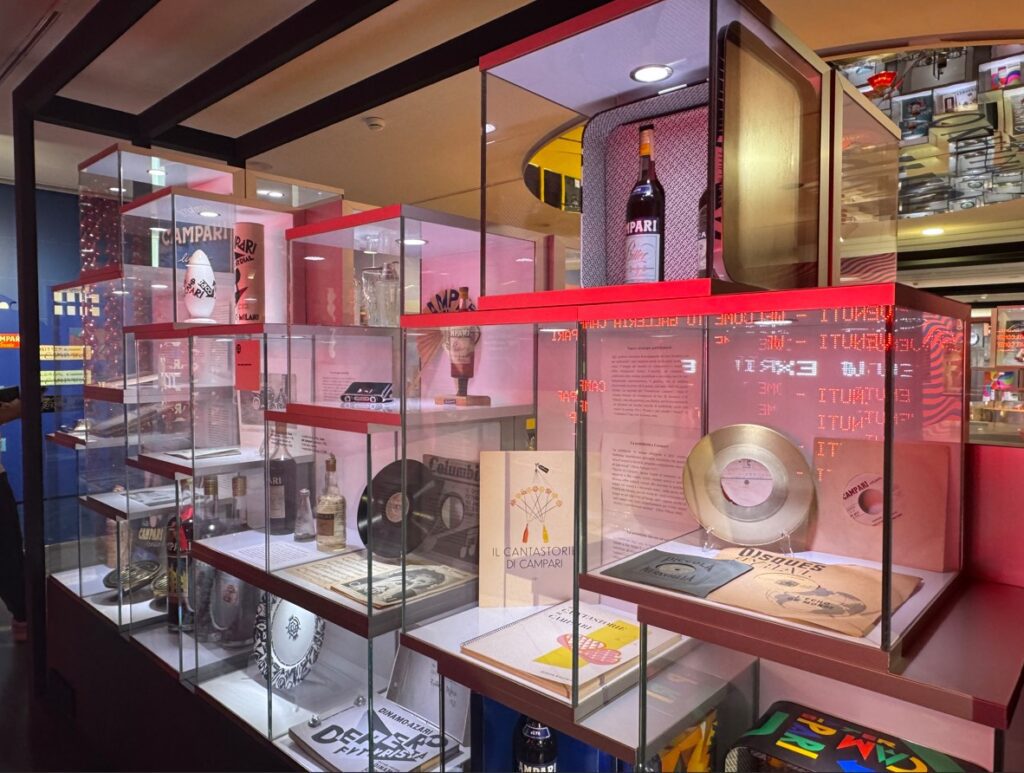
Here are some highlights from Hospitality and Tourism Management student Michelle Park and Marketing Management student Srajan Parwal:
Integration of branding, art and business strategy
Michelle Park, third-year Hospitality and Tourism Management student
Visiting Galleria Campari was one of the highlights of my trip to Milan. My understanding of how branding, art and business strategy can work together to create a globally recognized company has completely transformed as a result of the experience.
I gained knowledge of the Campari Group’s history and how it grew from a modest family business to a global brand during the tour. The thing that most impressed me was how deliberate Campari’s branding was from the start. The product was readily recognized in comparison to competitors thanks to the company’s distinctive red colour and striking visual brand.
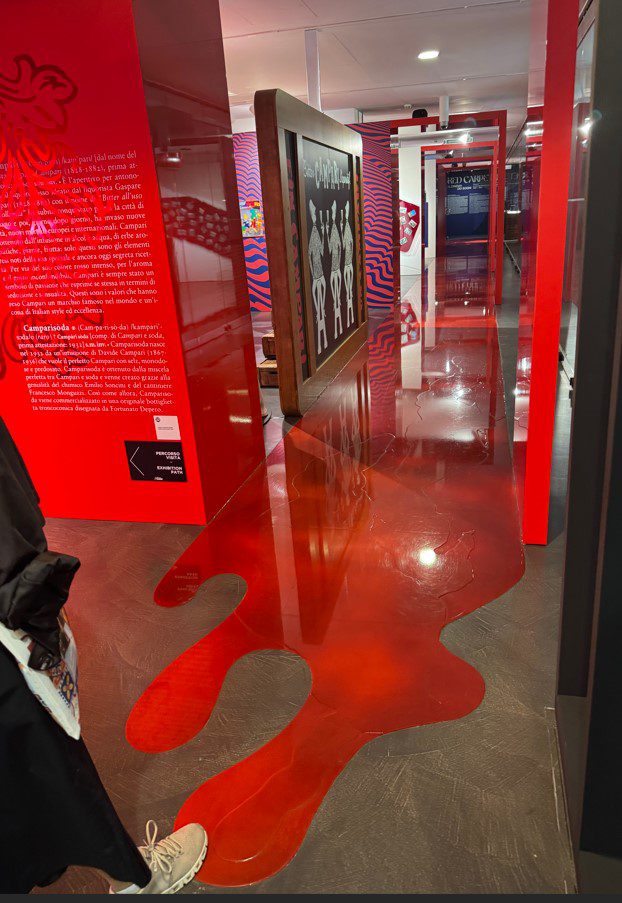
I was somewhat taken aback by Campari’s focus on art and advertising throughout its history as I strolled through the museum. The displays included everything from early television commercials and contemporary digital ads to vintage posters and illustrated campaigns. It was interesting to observe how the company consistently modified its marketing tactics to stay current with shifting client preferences while preserving its identity.
Finding out how Campari worked with well-known designers and artists to produce ads that felt more like cultural artwork than conventional marketing was one of the visit’s most illuminating aspects. In order to highlight how the corporation embraced creativity as a long-term branding strategy rather than merely short-term advertising, the museum displayed campaigns made by well-known artists, designers and filmmakers.
Learning about Campari’s corporate growth and expansion over the years through the acquisition of several brands under its umbrella also piqued my attention. This made it easier for me to comprehend how big, international corporations grow while maintaining their basic values and legacy.
All things considered, going to Galleria Campari improved my understanding of the connection between branding, narrative and customer involvement. From a retail and business standpoint, it was instructive and motivating to see how the company integrated history, culture, art and innovation into their marketing strategy.
Brand identity and marketing
Srajan Parwal, fourth-year Marketing Management student
Walking through Galleria Campari was one of the most memorable experiences of the trip, especially as a Marketing student. The visit showed me how a consumer product can evolve into something far greater through storytelling, heritage, design and emotional branding. Located inside the former Campari factory established in 1904, the gallery felt less like a corporate showroom and more like an immersive cultural exhibition. Everywhere I looked, there was intentional branding through architecture, vintage advertisements, product displays, artistic visuals and carefully curated storytelling. It immediately became clear to me that Campari is not just selling a drink, it is selling an identity, a feeling and a lifestyle deeply connected to Italian culture.
What impressed me the most was how consistent and recognizable the brand identity was throughout the entire experience. The bold red colour palette, artistic posters, typography and visual displays created an atmosphere that felt emotional, sophisticated and immersive. I realized that luxury branding is no longer only about expensive products. It is about creating emotional attachment and memorable experiences. Even though Campari operates in the spirits industry rather than traditional luxury fashion, the brand still felt luxurious because of its heritage, artistic direction, cultural influence and storytelling.
One particular marketing campaign completely stayed with me throughout the trip because I genuinely thought it was genius. Campari created a campaign inside Milan’s streetcar system where the hanging handles passengers hold onto displayed the words “Campari Soda.” However, when people pulled or moved the handles during the movement of the tram, the wording would transform into words like “Bitter” or “Cordial.” Such a simple interaction turned an ordinary everyday commute into a memorable brand experience. I honestly kept talking about this campaign the entire time because it perfectly demonstrated how intelligent and creative experiential marketing can be. There was no aggressive advertising, no digital screens and no complicated technology. It was simply clever human interaction integrated naturally into public space.
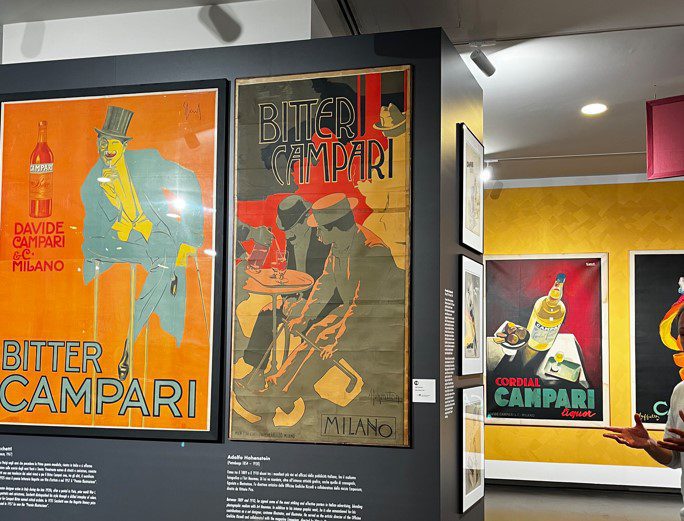
What fascinated me most was how the campaign created surprise and participation. People were unknowingly interacting with the brand rather than simply looking at an advertisement. To me, this represented the future of branding. The experience reinforced the idea that the strongest brands are not necessarily the loudest ones, but the ones that create emotional moments people remember long after the interaction ends. Milan overall felt like a city where branding and creativity exist naturally within everyday life, and Campari captured that perfectly.
The visit also highlighted how important heritage is in maintaining long term brand value. Campari continuously repurposes its history, artistic collaborations and Italian cultural identity within modern campaigns while still feeling contemporary and globally relevant. Representatives also discussed the company’s global portfolio, including Aperol and the worldwide popularity of the Aperol Spritz, which further showed me how Italian brands successfully export culture and lifestyle alongside products.
Sustainability was discussed as well through references to ESG reports, sustainable corporate initiatives and operational improvements within the company. However, what stood out to me was that sustainability felt secondary to the larger themes of storytelling, emotional branding and cultural identity. This connected strongly to my broader observations throughout Milan. Luxury and premium brands increasingly use sustainability as part of their narrative, but emotional connection and immersive experiences still remain at the center of consumer loyalty and prestige.
Overall, the Campari visit completely changed the way I think about branding and marketing. It showed me that the most powerful brands are the ones capable of transforming ordinary products into emotional experiences that people genuinely connect with and remember.
Eco hotel: Starhotels E.c.ho.
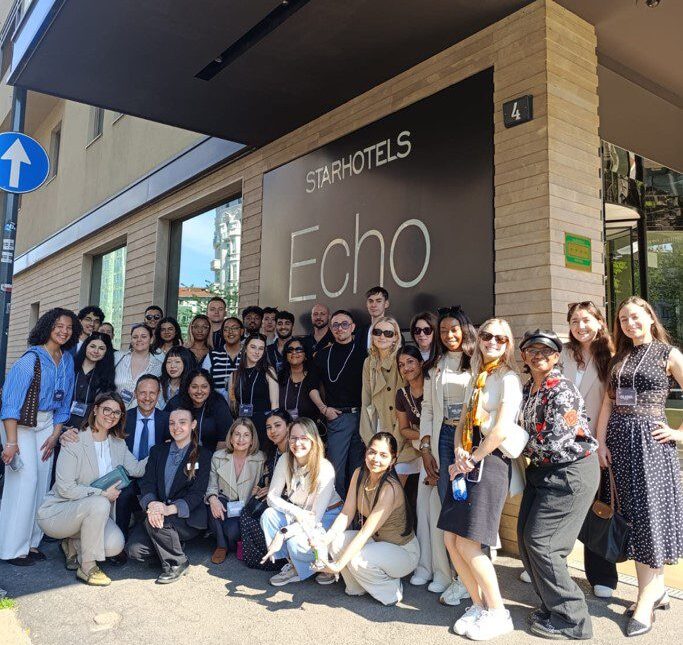
Leah Edwards, third-year Hospitality and Tourism Management student
As a student interested in sustainable luxury hotels, this visit was one of my favourites. I was most interested in seeing the differences between North American and European sustainable luxury hotels, whether that be in the different room sizes with North American hotels averaging on the bigger side and European rooms being smaller, or with regards to their sustainable goals.
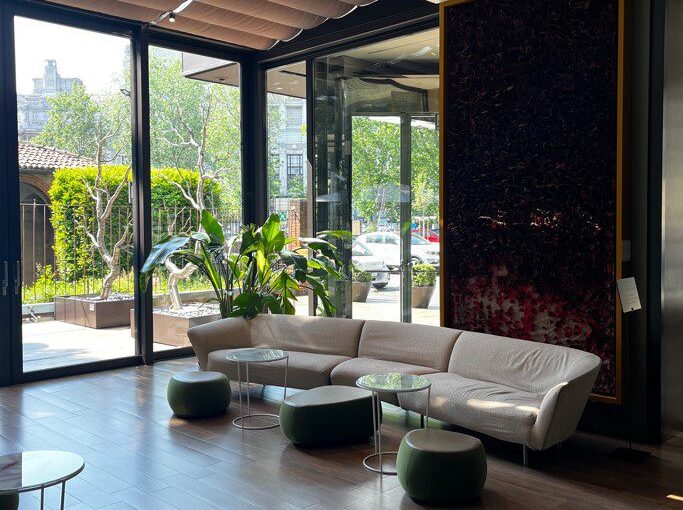
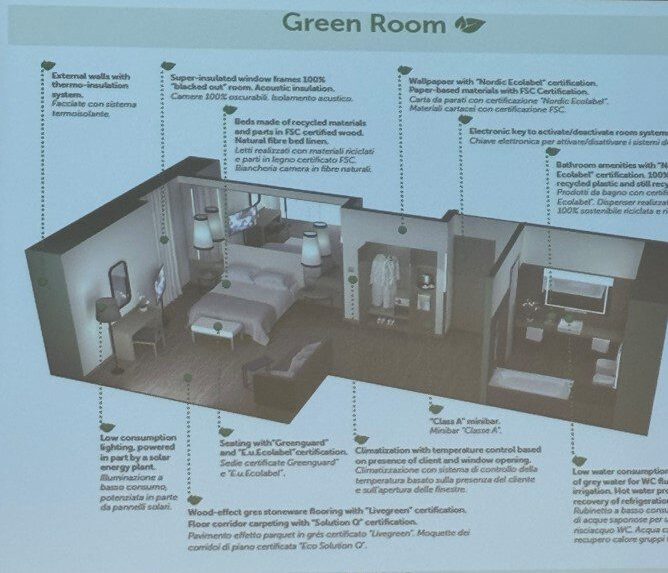
Throughout the tour of the hotel, we witnessed an emphasis on water conservation and the use of gray water for irrigation. This hotel also follows the guidelines to make it both green globe certified and Beyond Green certified, which are both awards for sustainability in hospitality.
Not only does this hotel look to establish itself as eco-friendly, it also works to build and maintain the culture and the social economic well-being of local people. The Eco hotel achieves this in many different ways. A formidable example of this is the fact that they maintain a cultural site next to the hotel called Pozzobonelli Chapel, and also plan community-driven events that help engage their staff with the locals in the area.
As a hospitality student the Eco hotel was a highlight of the trip and highlighted numerous aspects of my sustainable tourism courses. In essence, it epitomized simple luxury.
Michelle Park, third-year Hospitality and Tourism Management student
During our trip, we had the opportunity to visit an eco-conscious luxury hotel, Starhotels E.c.h.o., where we learned how sustainability is integrated into operations without compromising the guest experience. The hotel showcased practical initiatives, such as key card systems that automatically turn off lights and air conditioning, helping reduce energy consumption. It has also eliminated single-use plastic toiletries, replacing them with refillable dispensers, an impactful change given the hotel’s high occupancy.
Water conservation plays a key role through a “Green Choice” program, where guests can opt out of daily housekeeping in exchange for rewards. Additionally, a greywater system allows the hotel to reuse water for irrigation, reducing waste significantly. The property also prioritizes certified sustainable materials and locally sourced food, while minimizing food waste through donation programs.
Read more about Michelle’s visit
Beyond operations, the hotel emphasized community engagement and staff training as essential components of sustainability. Employees are trained regularly to ensure these practices are consistently implemented and communicated to guests. However, challenges remain, particularly in balancing guest expectations of luxury with sustainable behaviors and managing higher operational costs.
Overall, this visit offered valuable insight into how sustainability is shaping the future of luxury. After exploring landmarks like Galleria Vittorio Emanuele II, this experience highlighted that modern luxury is no longer defined solely by aesthetics and exclusivity, but increasingly by responsibility and innovation.
Global strategy and sustainability
Olesia Demediuk, MBA, Class of 2026
Alessia Pugliese, MBA candidate
Returning from this experiential learning trip, we’ve been looking at sustainability through the lens of Italian luxury. What stood out most was that sustainability in Milan was rarely communicated through performative messaging or corporate slogans, but was quietly and intentionally embedded in operations, craftsmanship, architecture, service culture and long-term brand thinking. Across the business visits and discussions at Armani Exchange, Campari Group, Federmoda, AICE, Starhotels and Franciacorta Winery, a consistent theme emerged: in mature luxury ecosystems, sustainability is one with heritage, permanence and disciplined brand stewardship.
Read about the MBA students’ learnings from their business visits
At Armani Exchange, the retail environment itself communicated restraint and longevity. Materials, lighting, spatial flow and visual merchandising emphasized timelessness over excess consumption, reinforcing the idea that sustainable luxury is often rooted in slower, more intentional purchasing behaviours rather than loud ESG messaging.
At Starhotels, sustainability was integrated into the guest experience through operational efficiency, subtle behavioural design, clever loyalty programs, responsible sourcing, and energy-conscious practices without compromising emotional warmth or premium service standards. It demonstrated that in hospitality, sustainability succeeds when it feels seamlessly integrated into the guests’ experience rather than performatively displayed in brochures and on websites.
The Franciacorta winery visit further expanded the idea of sustainability beyond environmental metrics alone; discussions around land stewardship, controlled production, intergenerational continuity and preservation of regional identity highlighted how sustainability in Italy is deeply connected to cultural preservation and long-term thinking. Equally impactful were the conversations with Federmoda and AICE around the future of luxury retail, omnichannel transformation, AI integration and evolving consumer expectations. What became clear is that organizations in the luxury space are not only balancing innovation and tradition, but rather strategically integrating both.
One of the strongest leadership lessons from the experience was observing how leading Italian organizations maintain discipline around identity. Whether in retail, hospitality, food and beverage, or fashion, there was remarkable consistency between brand narrative, customer experience, operational execution and long-term strategic vision.
As MBA students operating at the intersection of business, leadership and innovation, we found that the Milan experience reinforced the idea that sustainable growth is not achieved solely through reporting frameworks or technological adoption, but rather by building cultures that simultaneously preserve trust, craftsmanship, emotional connection and operational excellence. Experiential learning of this kind changes how strategy is understood: the concepts and frameworks on the slides become observable leadership decisions, operational realities and customer experiences.
Federmoda: National Federation for the Fashion Industry
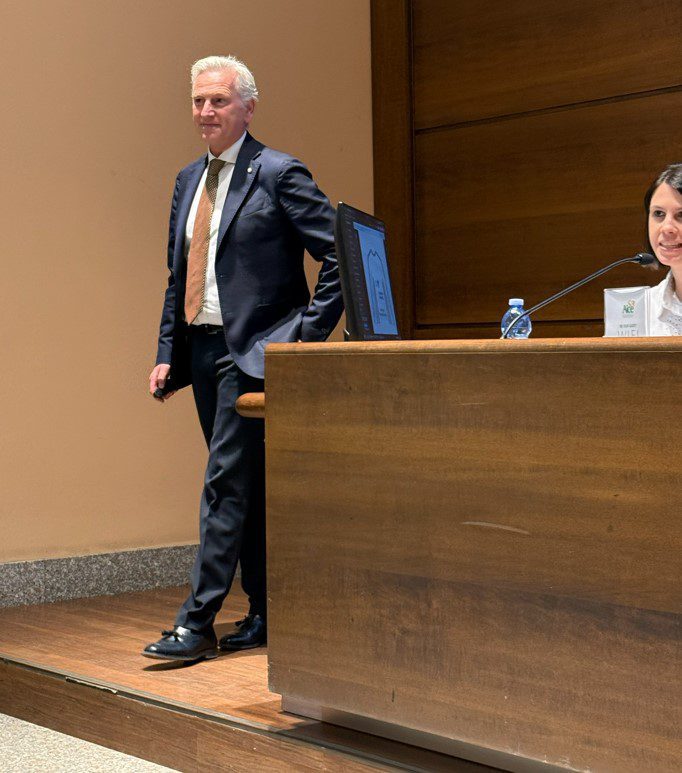
Vitalii Nazarchuk, fourth-year Global Management student, Class of 2026
Before visiting Federazione Moda Italia, I thought Italian fashion was about luxury storefronts, runway shows and beautiful craftsmanship. This session changed my perspective. It was not all about fashion, but about the realities and pressures that Italian fashion businesses face. Listening to Massimo Torti (National Director, Feramoda) I realized that the Italian fashion industry is at a turning point. Italian fashion has to deal with sustainability, technology, globalization and changing consumer values. These changes are forcing fashion brands to rethink how they operate.
What stood out to me almost immediately was the contrast Torti explained between Italy’s macroeconomic recovery and the reality of its fashion retail sector. On paper, the country is doing well now since the spread has come down significantly, the deficit is under control, inflation is back to a healthy level, and employment is at a historic high. Yet fashion is somehow moving in the opposite direction. He explained that spending on fashion products in Italy has dropped by billions of euros over the last few years, sales keep declining and thousands of fashion retail stores have shut down across the country, taking a huge number of jobs with them. For a country whose identity is so tightly tied to clothing and design, hearing that was genuinely surprising.
Read more about Vitalii’s learnings
One thing I learned from the session was that sustainability is no longer a branding strategy. Italian fashion businesses have to be sustainable to survive. I noticed that sustainability is communicated everywhere through campaigns, retail experiences and storytelling, but Federmoda helped me understand how difficult it actually is to implement sustainability operationally across an entire industry. Torti shared numbers that really put this into perspective. Global clothing production has doubled since 2000, sales have grown by 400% in the same period, and the average garment is now discarded after only seven or eight uses. That kind of “almost disposable” consumption pattern is exactly what the federation is trying to push back against.
Another point that really stayed with me was the conversation around global competition, and from a global management perspective, this was probably the most valuable part of the session. The phrase Torti kept coming back to was “stesso mercato, stesse regole”, which basically means “same market, same rules.” He explained how international marketplaces, ultra-fast-fashion platforms shipping directly from outside the EU, and counterfeit sellers online are all competing with Italian neighborhood stores without carrying the same labor costs, rents, taxes or bureaucratic load that local businesses have to deal with. The playing field just isn’t level, and it’s the small Italian retailer who ends up absorbing the difference.
Torti also walked us through how the federation tries to fight this on multiple fronts, from sitting at the Fashion Roundtable with the Ministry of Business and Made in Italy, to ongoing dialogue with the Ministry of Economy and Finance, to lobbying work in Brussels through Confcommercio and Eurocommerce. Italian fashion still dominates globally because of its heritage, quality, craftsmanship and storytelling, but the industry is now competing in a world shaped by fast fashion, digital acceleration and trends that change almost overnight.
As a Global Management Studies student, I found this session especially valuable because it connected directly to the larger themes of my trip. Fashion today is no longer just about selling products, it is about building emotional connections, cultural identity, sustainability and meaningful experiences. Federmoda helped me understand that Milan’s luxury retail industry is not standing still, but actively evolving in response to social, technological and environmental change.
Winery experience in Franciacorta: Corte Lantieri
Leah Edwards, third-year Hospitality and Tourism Management student
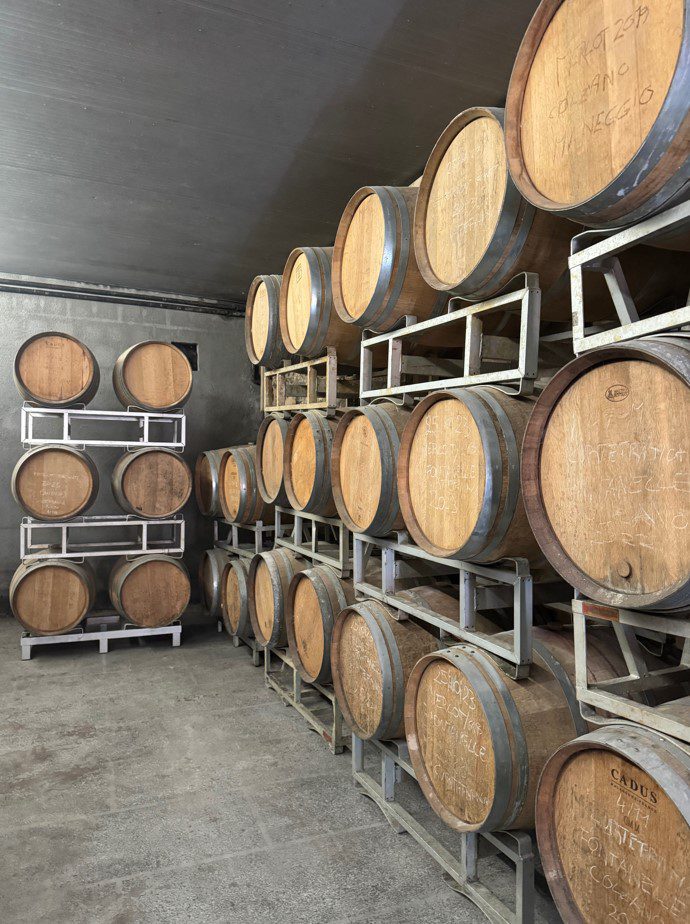
Nestled among the hills of Capriolo and Adro in the Franciacorta region is Lantieri de Paratico, a family-run winery, which we had the pleasure of visiting on the last day of our trip. Here we got the opportunity to experience different aspects of culture within the region. Learning about the history of the winery gave us insight into the levels of sustainability that have been implemented since 1974.
This winery has been in the Lantieri family for generations, and it continues to innovate and grow while maintaining ancient traditions. To this day, it maintains the tradition of donating grape wastes to nearby Grappa companies, which is used to create a drink similar to brandy. This process highlights the traditional use of the grape by-product and also highlights the fact that it is sustainable.
The winery also acts as a wine resort in the Franciacorta region. It hosts multiple events and creates exclusive guest experiences. As a class, we were hosted for a farewell experience in their restaurant, during which we had the opportunity to try different wine and food options. During our dinner, Dr. Donna Smith and Dr. Joe Aversa enhanced the evening by creating a small ceremony that showcased outstanding students on the trip.
As a hospitality student, the changes and challenges that were discussed during the tour, highlighted the importance of sustainable practices within all avenues of business, not only specific to hospitality and tourism.
Canadian Consulate
Srajan Parwal fourth-year Marketing Management student
Vitalii Nazarchuk, fourth-year Global Management Studies student
Visiting the Canadian Consulate in Milan gave me a completely different perspective on international business, diplomacy and global trade relations. Before this visit, I mainly associated consulates with immigration services, visas, passports and political relations. However, the session showed me that diplomacy also plays a major role in shaping trade, investment and economic relationships between countries. The visit felt extremely formal, professional and secure from the moment we entered the building. We weren’t even allowed to bring our phones inside, which immediately created the feeling that we were entering a highly official environment. Despite the formal atmosphere, Cynthia Carlone (Consul and Senior Trade Commissioner) and the representatives were incredibly welcoming, engaging and passionate about the relationship between Canada and Italy.
Coming from Global Management Studies, what stood out to me right away was how much the consulate actually works as a connector between two very different business environments. Canada and Italy have their own regulatory systems, cultural expectations and ways of building trust in business, and the consulate sits in the middle of all of that. Listening to the representatives talk about how they guide Canadian companies through the realities of doing business in Italy, and how they help Italian investors understand what Canada really offers beyond the usual stereotypes, made me realize how much work happens behind every cross border deal. A lot of it comes down to people, relationships, language and knowing how each market actually operates day to day, which is exactly the kind of thinking my program focuses on.
Read more from Srajan and Vitalii
One specific point Cynthia made that I found very interesting from a global management perspective, was how Canada and Italy actually import pharmaceuticals from each other in both directions. At first that sounded a bit counterintuitive to me, because I always assumed countries would import what they cannot produce themselves and export what they specialize in. She explained that in reality, pharmaceutical trade does not really work that way. Different countries focus on producing different categories of medication, active ingredients and treatments, so it ends up being more efficient for Canada to send certain products to Italy while importing others back from Italian manufacturers. A lot of it also has to do with regulatory approvals, manufacturing capacity and the specific patents or licensing agreements each company holds in each market. It truly showed how two developed countries with strong economies can still genuinely depend on each other in very specific sectors instead of competing head to head.
One of the most interesting aspects of the discussion was learning about the role of the Trade Commissioner Service and how governments actively support businesses in expanding internationally. I had never fully realized how much work goes into attracting foreign investment and positioning a country as a desirable place for global companies to operate. The representatives explained how Canada promotes itself through networking events, trade fairs, investment booths and business partnerships in order to attract Italian companies and investors. It was fascinating to see how countries themselves must also engage in branding and marketing, almost like corporations competing for global attention and investment.
A discussion that particularly stayed with me involved the changing perception of Canada as an investment destination. The representatives explained that Canada was previously viewed by many Italian investors as a strategic gateway to the United States because of its geographic proximity and economic relationship with the American market. However, they explained that this perception has evolved over time, and global business dynamics are becoming more complex and competitive. Hearing this conversation made me realize how interconnected politics, economics, trade and branding truly are in international markets.
Another memorable example discussed during the visit was Lululemon opening its flagship store in Milan during the Olympics, where the Canadian Consulate was also involved in supporting and promoting Canadian presence abroad. This demonstrated how diplomatic institutions can contribute to cultural and economic visibility at the same time. It also reinforced something I noticed repeatedly throughout Milan. Luxury, branding, business and national identity are all deeply interconnected.
Overall, the Canadian Consulate visit expanded my understanding of international business far beyond what I had previously imagined. It showed me how trade relations, investment attraction and diplomacy all work together behind the scenes to shape global business ecosystems. As a marketing student, I found it extremely interesting to see how even countries themselves must carefully build, position, and communicate their identity to the world.
